In Living Colour
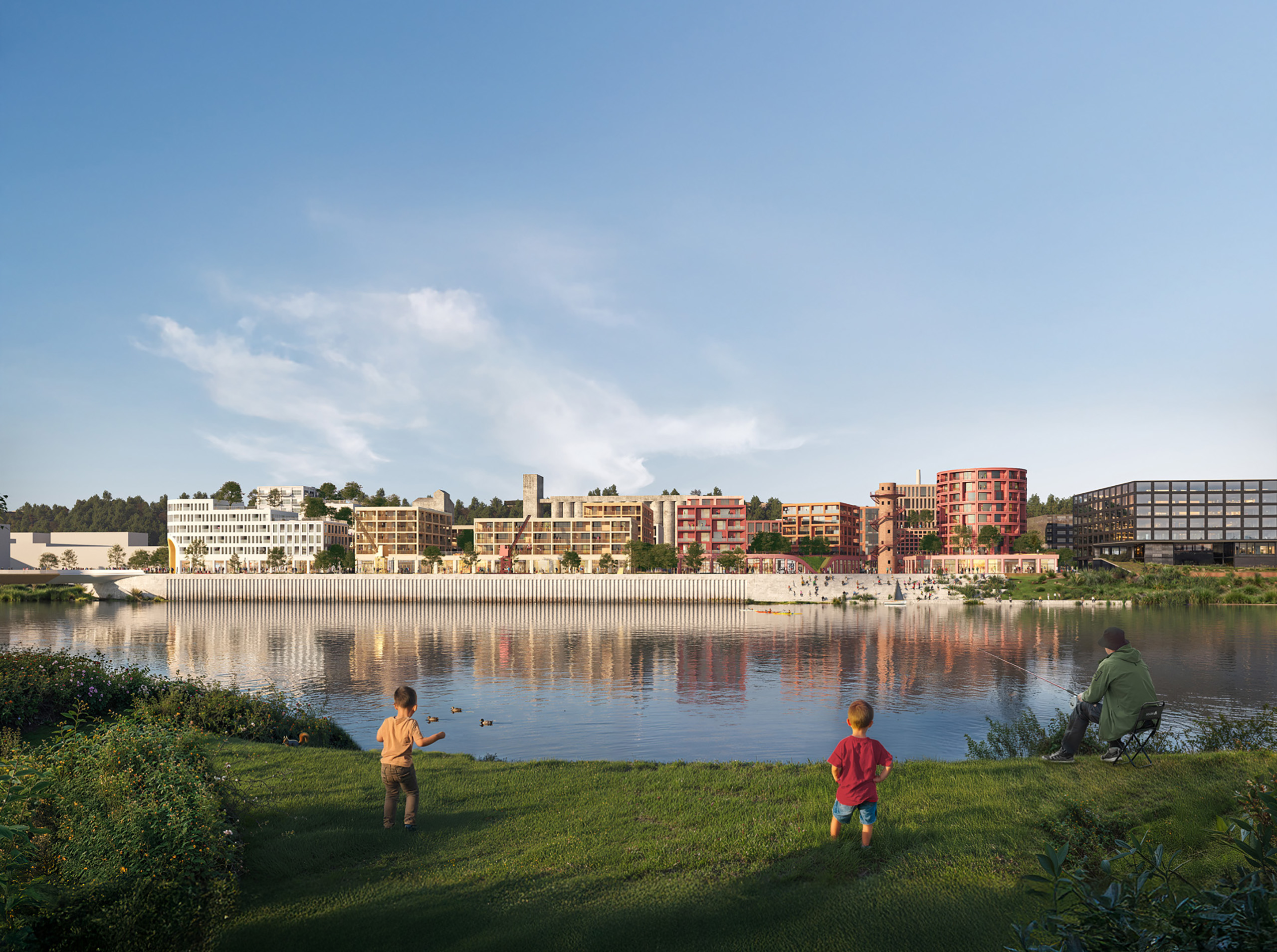
MVRDV’s competition entry for the south bank of the Nemunas River proposed to transform a former mineral quay into a mixed-use neighbourhood that connects Kaunas’ industrial past with a sustainable urban future. The design combines a colour gradient that evokes the site’s industrial past, contextual responses to the site’s qualities in the present, and innovative approaches to construction and resilience that look towards a sustainable future. With its vibrant mixture of uses and multi-layered public spaces, the design envisages a dense neighbourhood and a vivid lifestyle; with this development, the urban core of Kaunas crosses the river.
- Location
- Kaunas, Lithuania
- Status
- Competition
- Year
- 2025–2025
- Surface
- 49000 m²
- Client
- SBA Urban
- Programmes
- Mixed use, Offices, Retail, Residential, Master plan
- Themes
- Urbanism
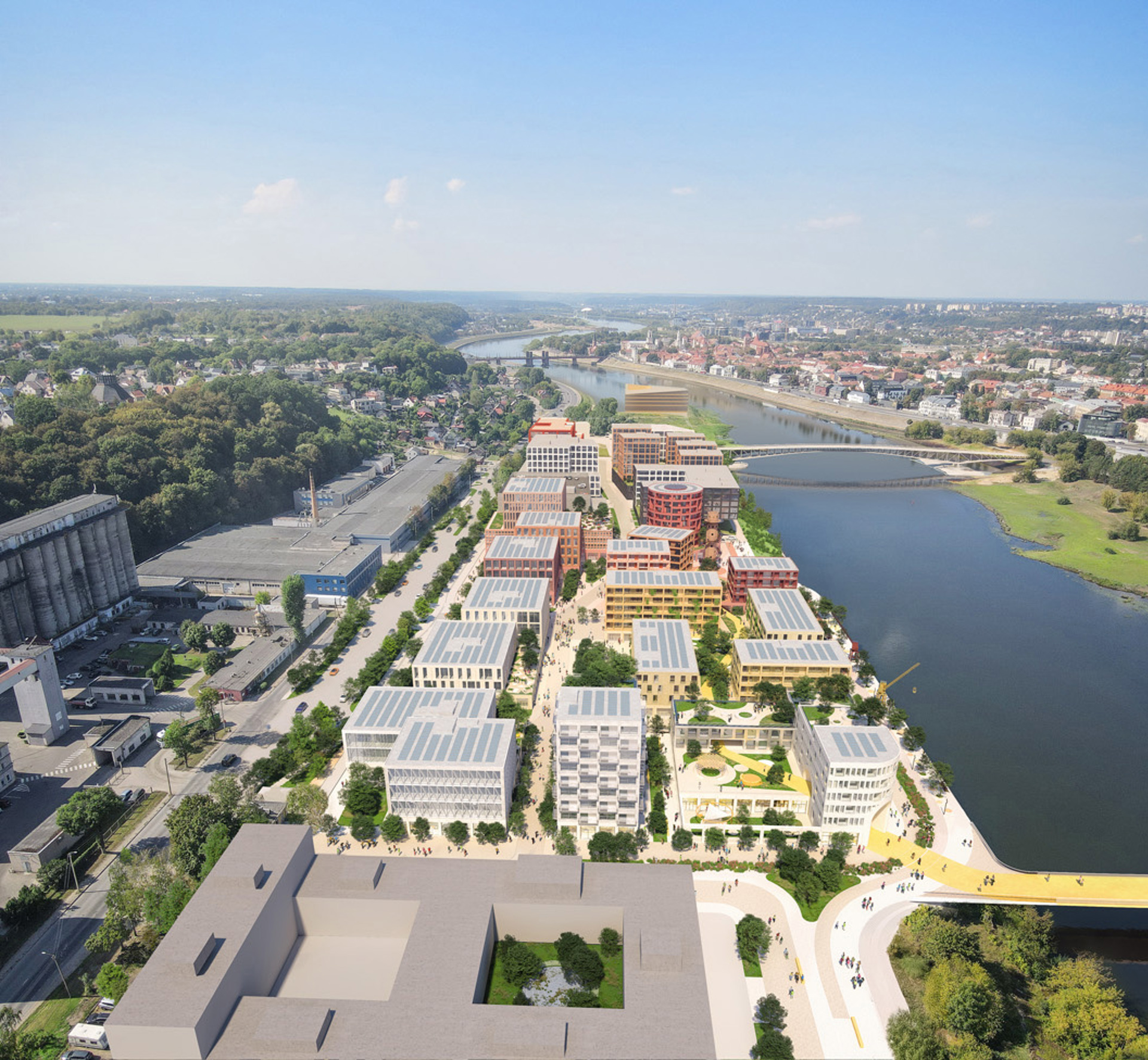
Until now, the left bank of the Nemunas has been characterised by industrial uses. Some of these are now being replaced by Nemunaičiai, an emerging neighbourhood being planned in multiple phases by developer SBA Urban. Catalysed by a pedestrian bridge that is soon to connect Kaunas’ historic city centre, the neighbourhood represents a critical moment in the development of Kaunas, as the city’s urban core expands to the other side of the river.
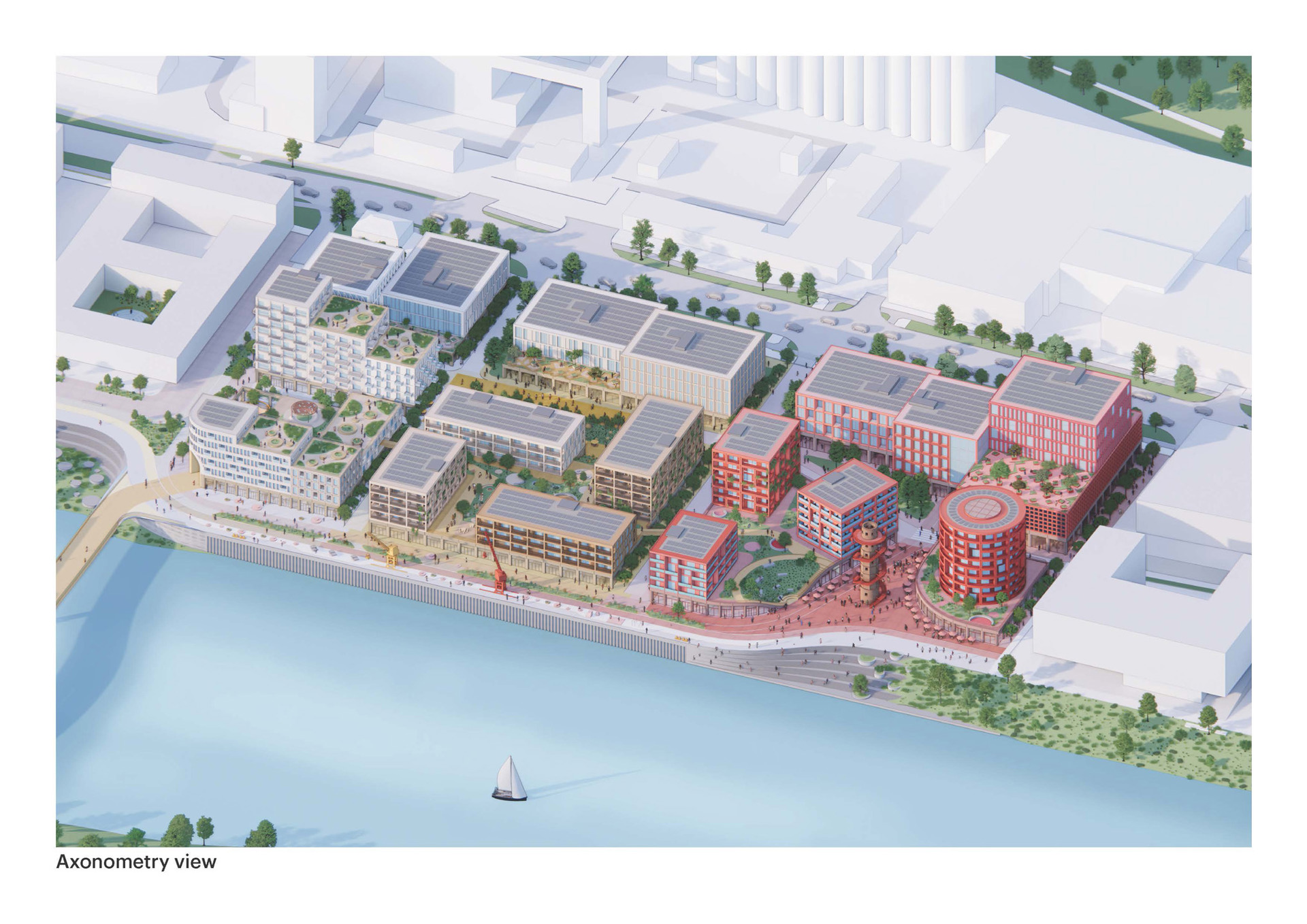
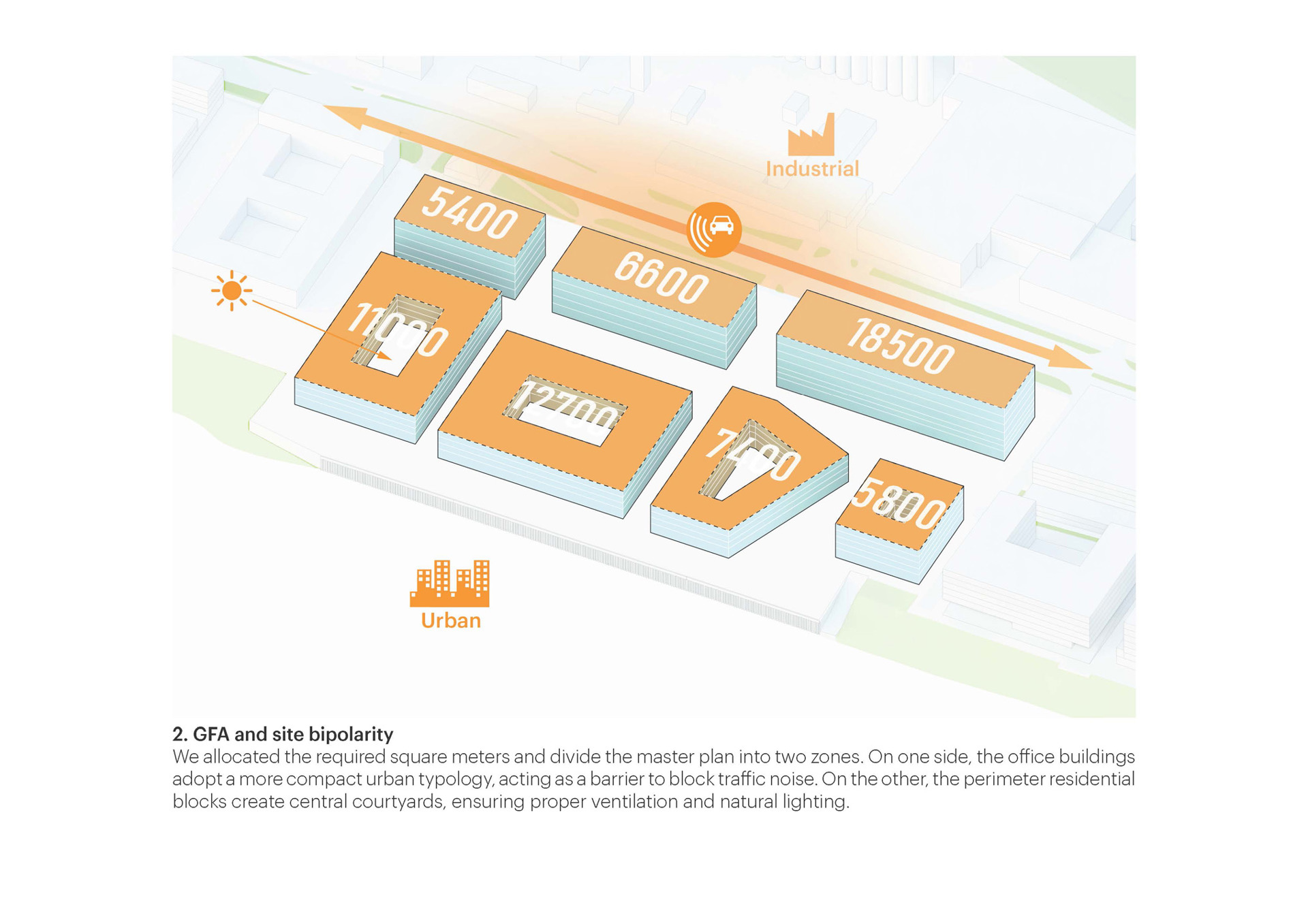
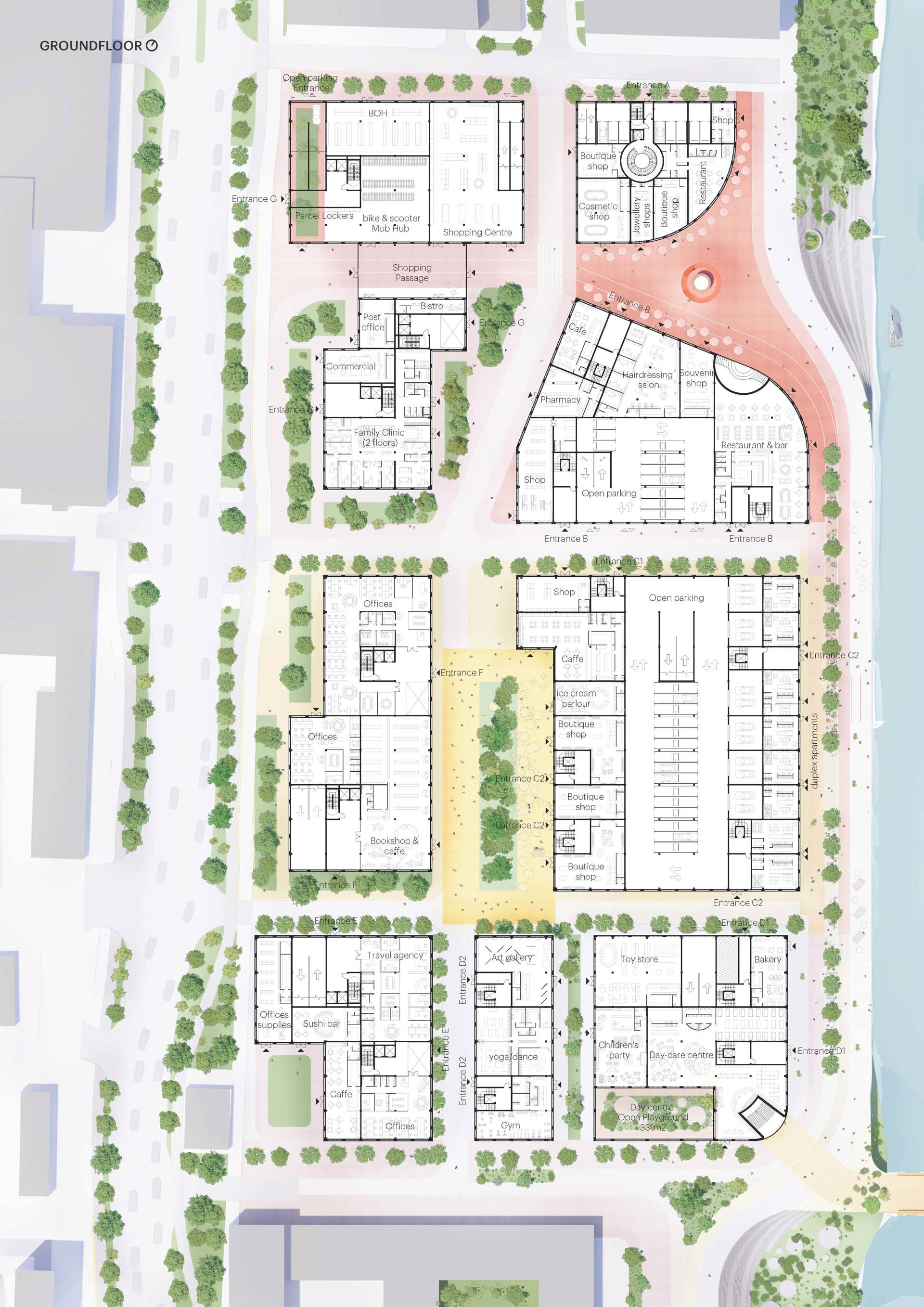
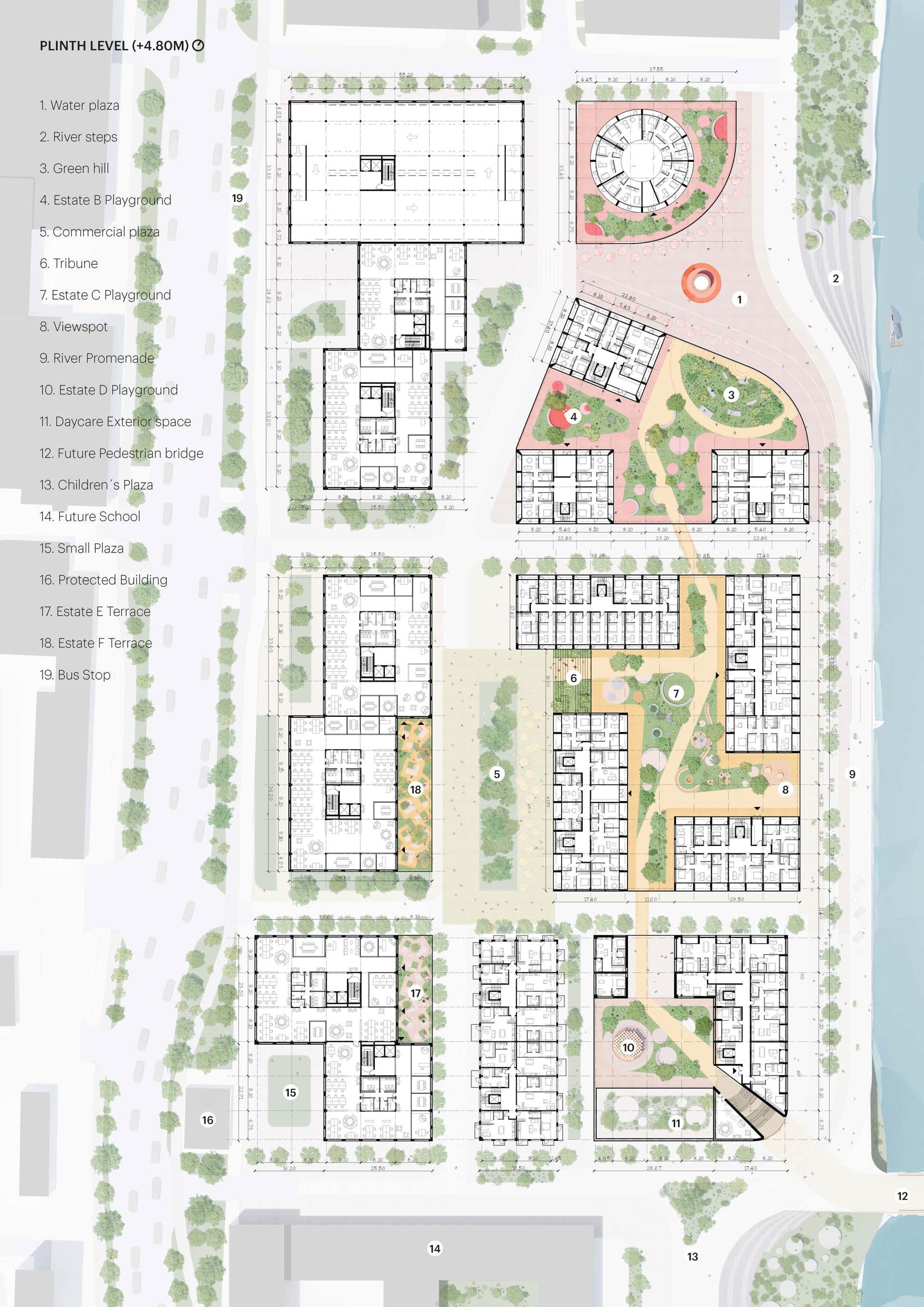
The design places residential functions to the north, oriented to capture sunlight and views while minimising shadows on the river’s edge to create an inviting promenade. On the southern part of the site, office blocks and a mobility hub are arranged to create an acoustic barrier, shielding public spaces and homes from the noise of traffic on H. ir O. Minkovskių Street.
Related projects
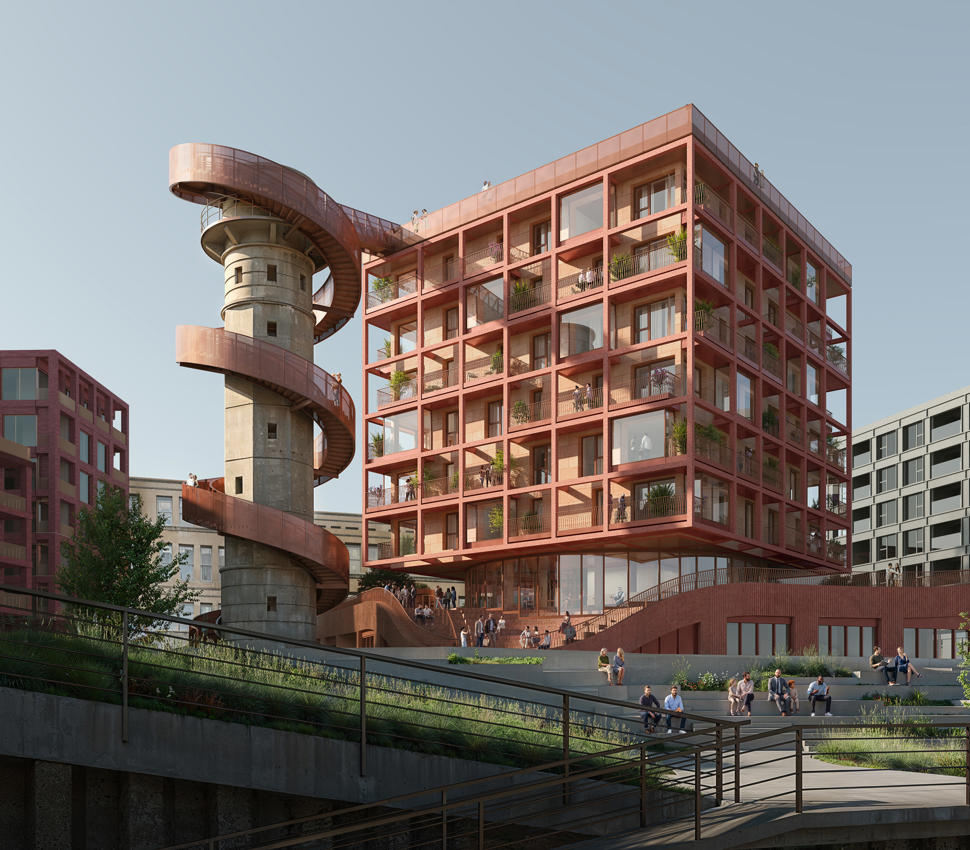
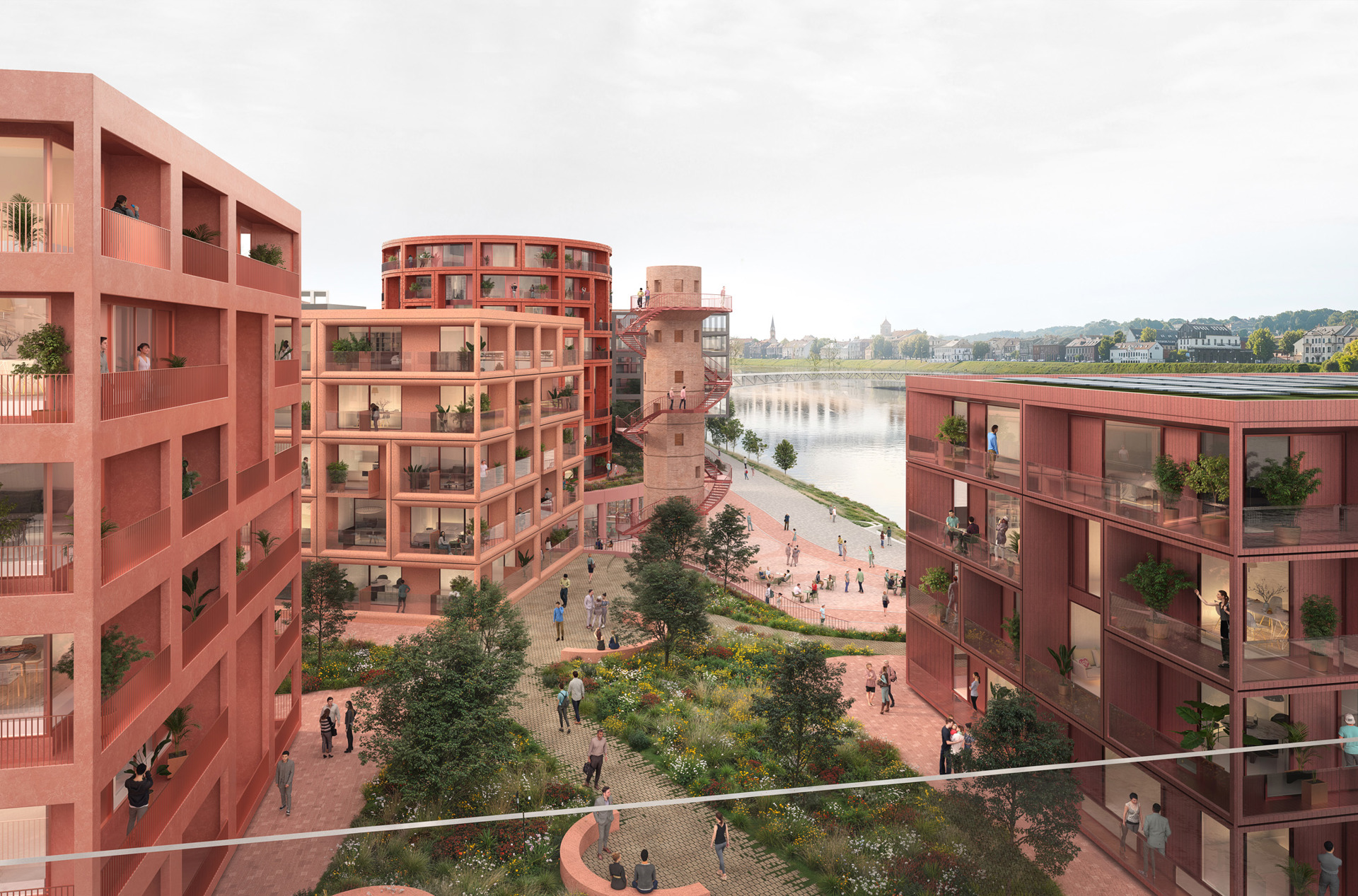
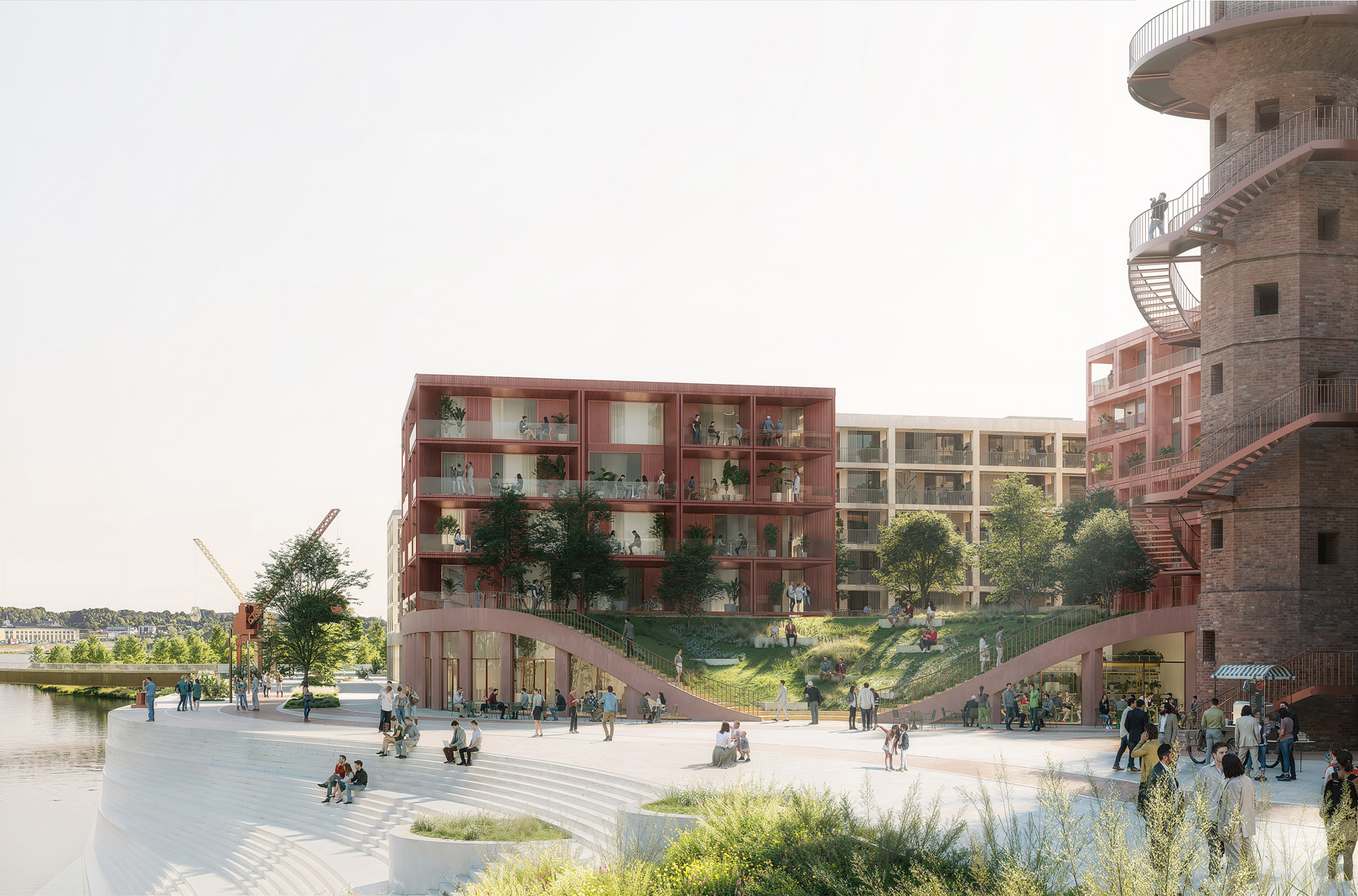
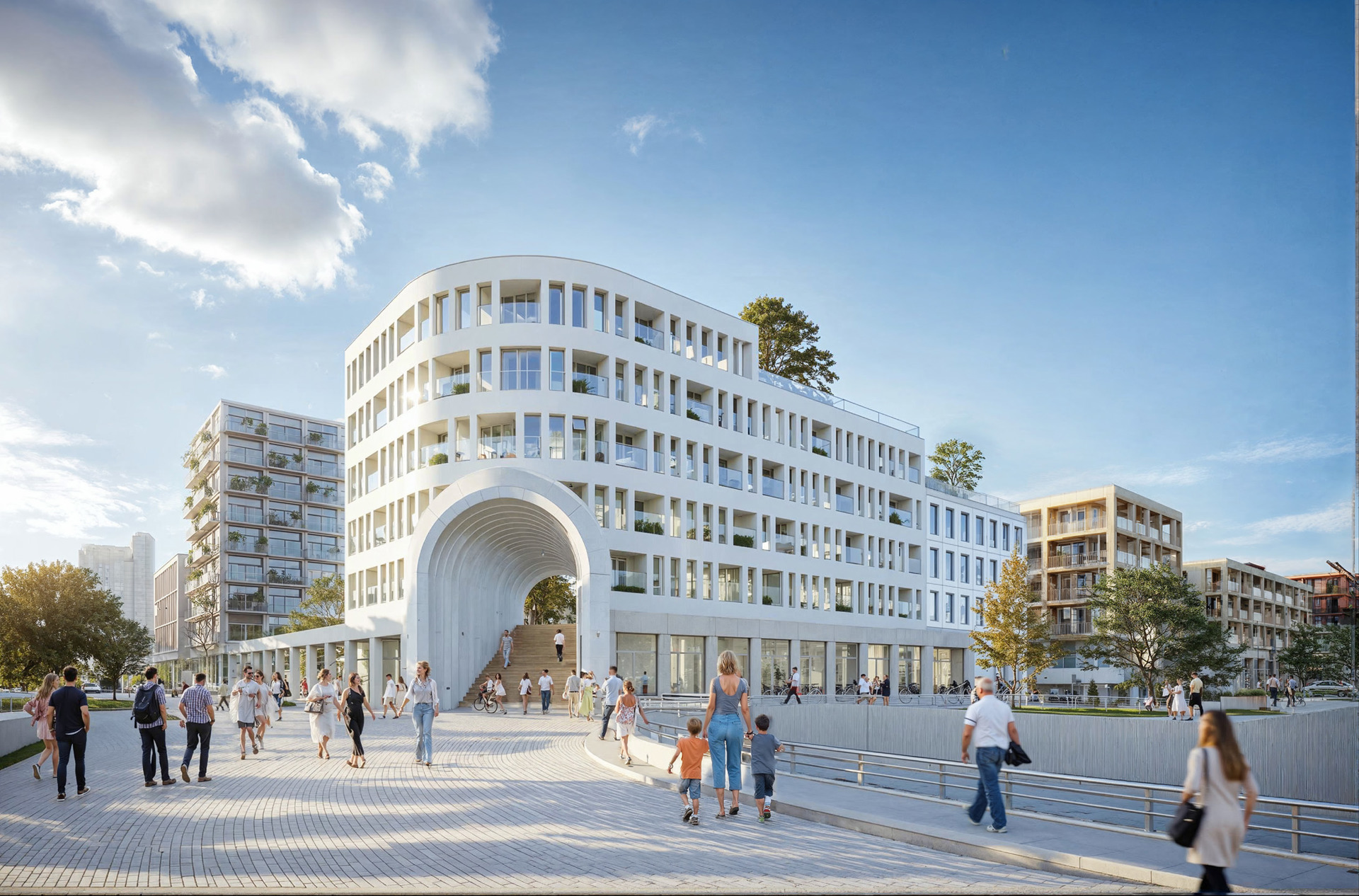
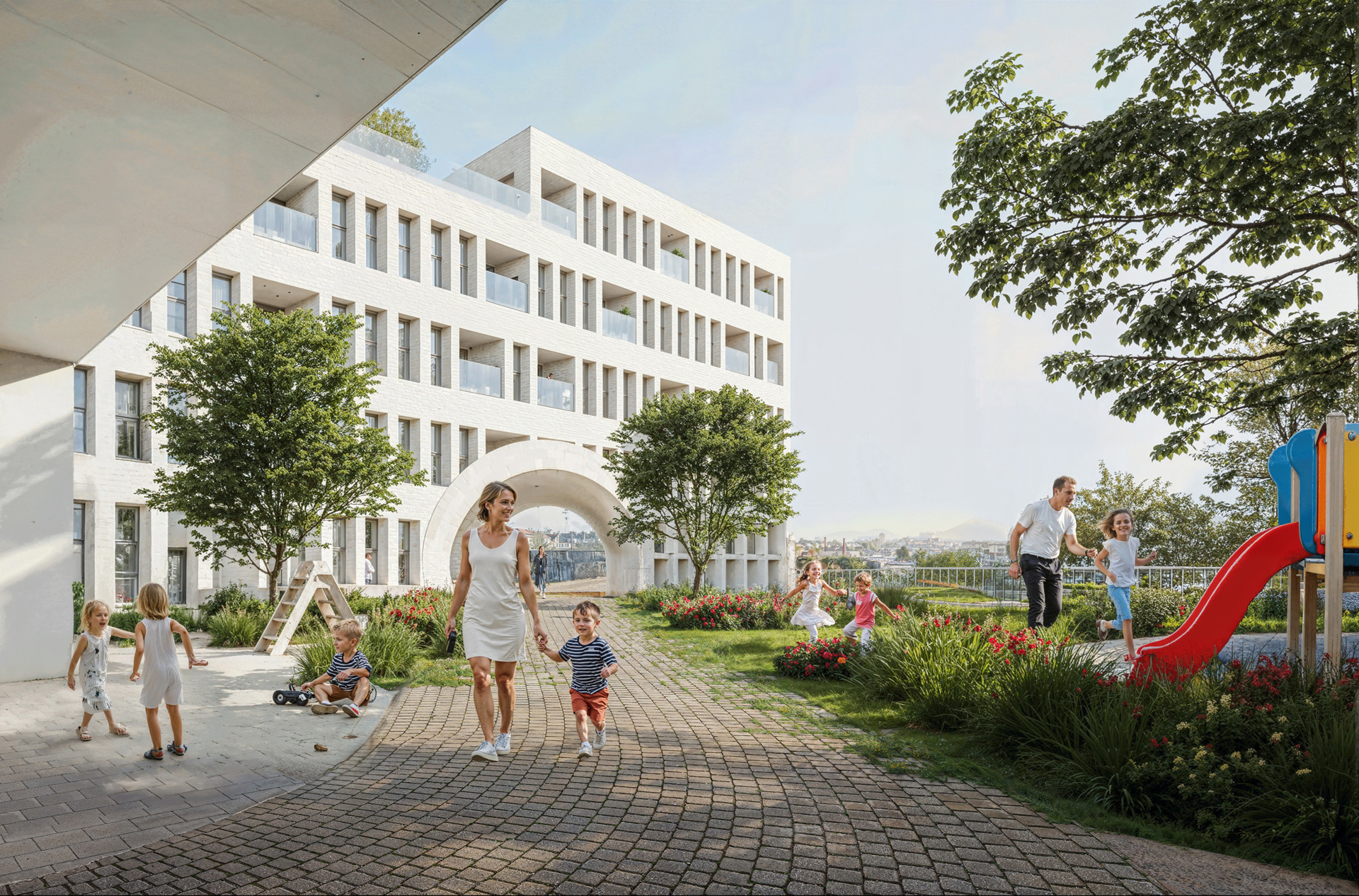
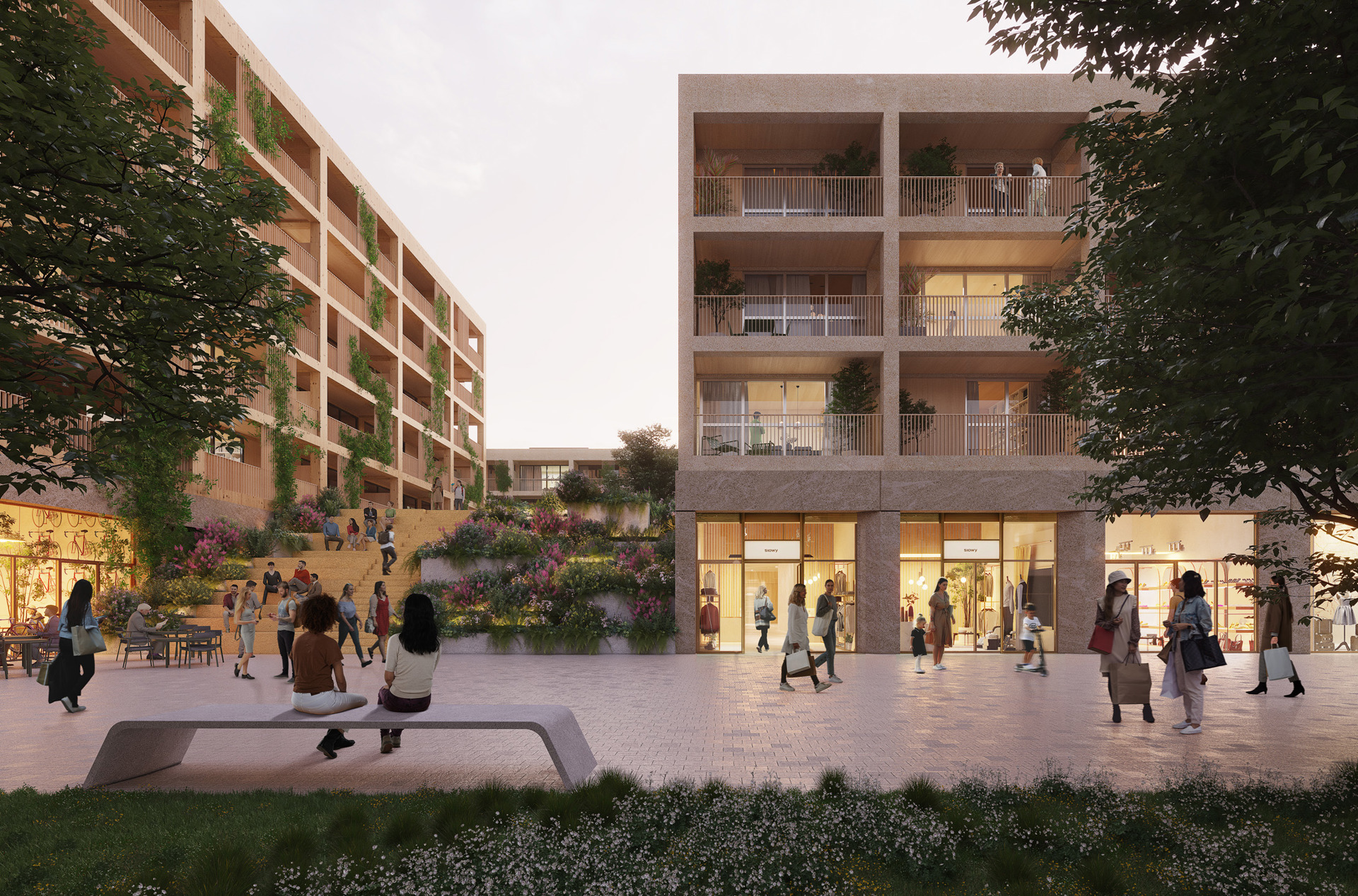
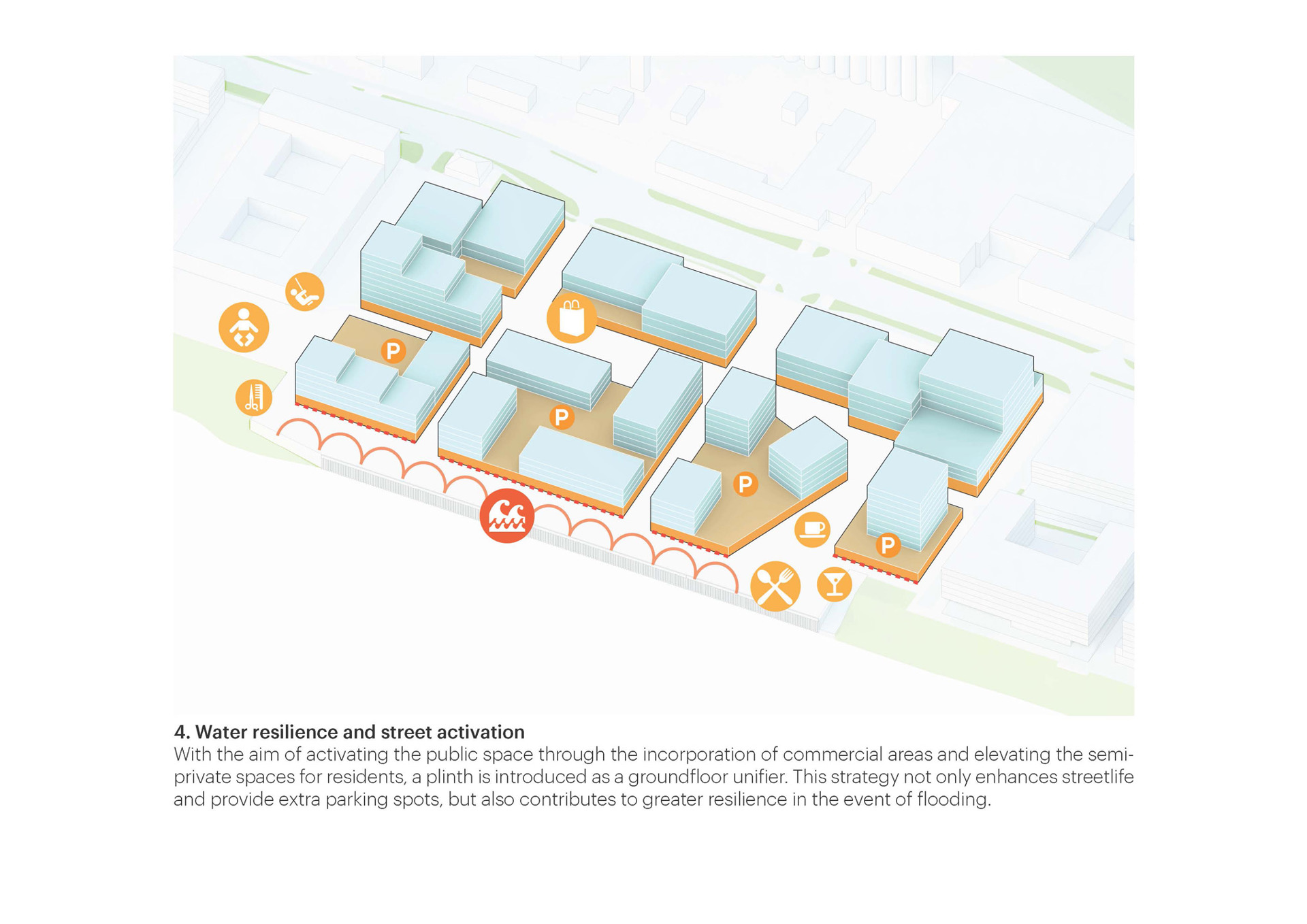
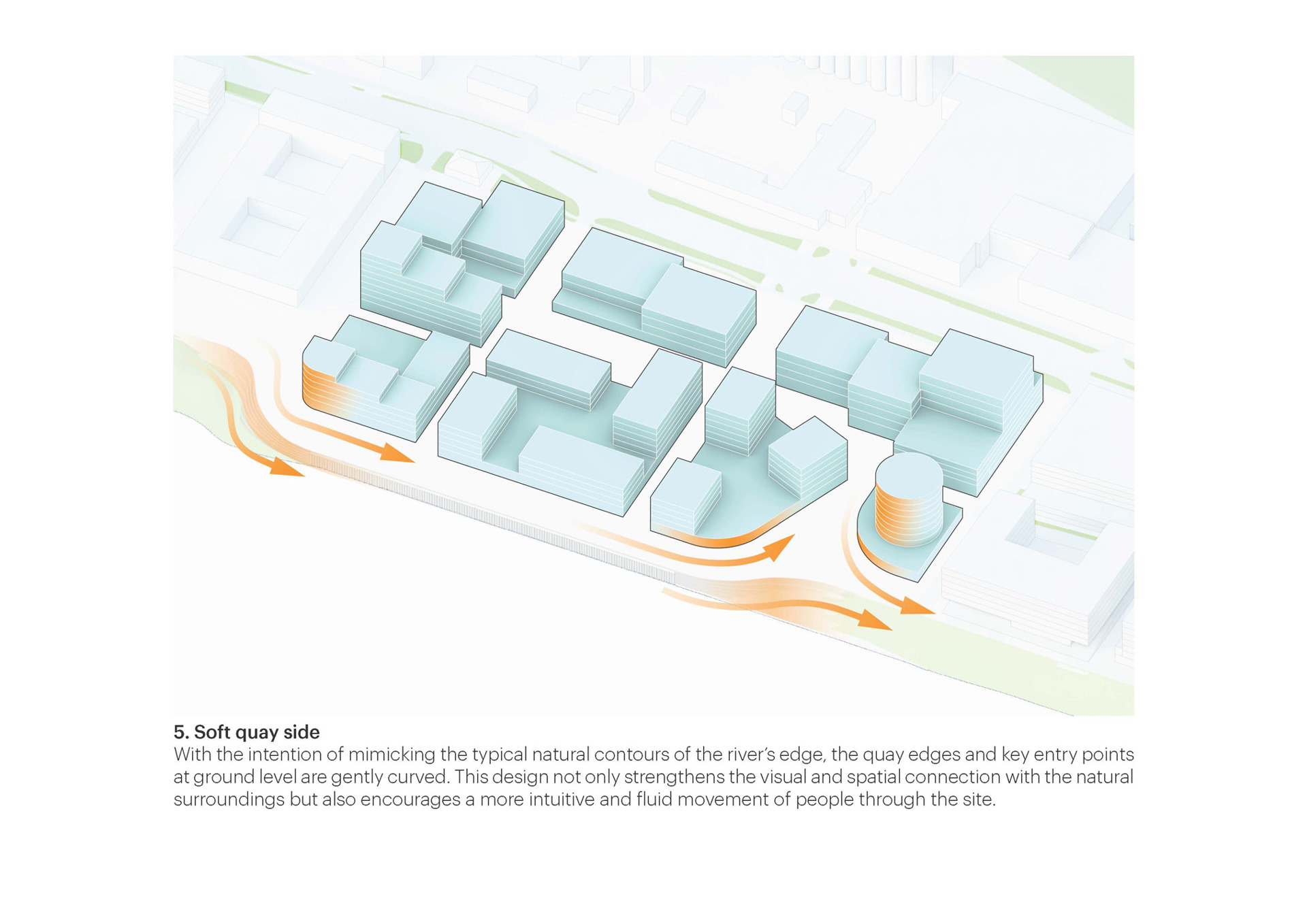
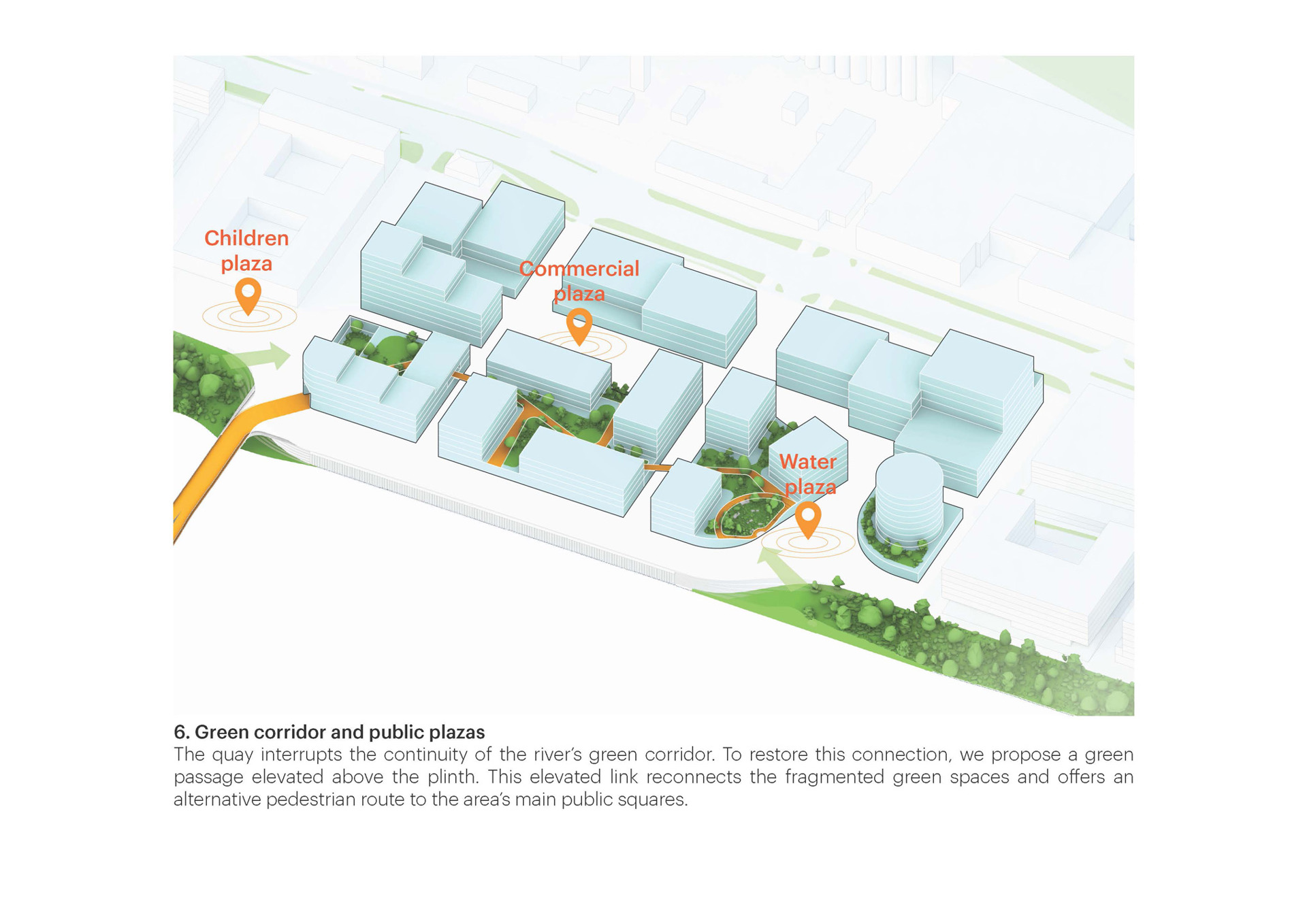
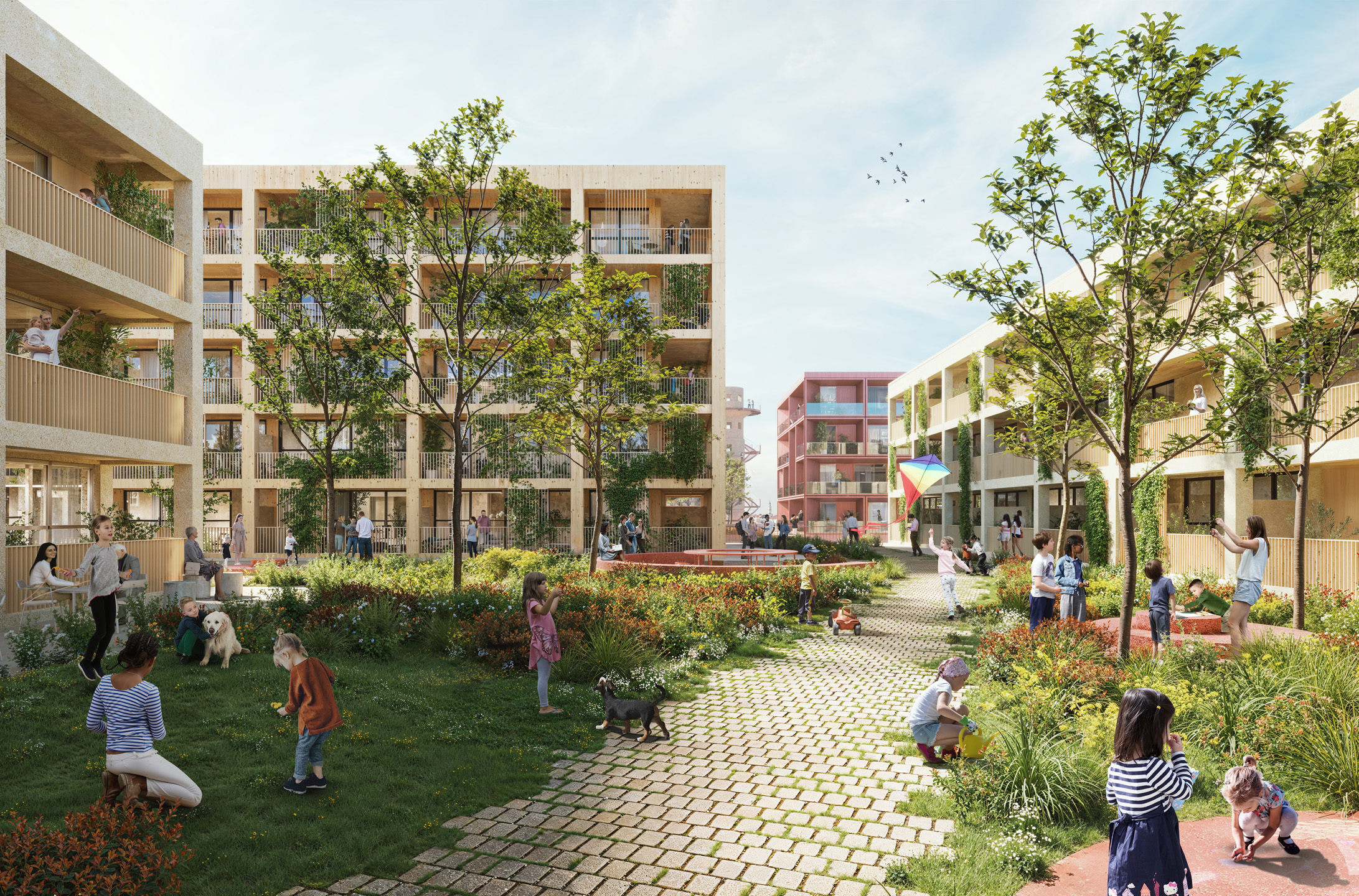
A key element of the proposal are the single-storey plinths that unify each block. With their deep floorplans, these plinths host commercial spaces to enhance street life. In the residential blocks, the plinth roofs become elevated courtyards, with green landscaping that extends the public realm vertically, providing community gardens and recreation areas for residents. Three of the blocks are connected by bridges, allowing movement across the site on multiple levels and re-establishing the continuous green route along the riverbank that is interrupted by the site’s quay wall. To provide access to this upper route, a staircase rises through a grand archway on the eastern end, while on the western end, a tribune staircase doubles as a grandstand for summer performances in the plaza below.
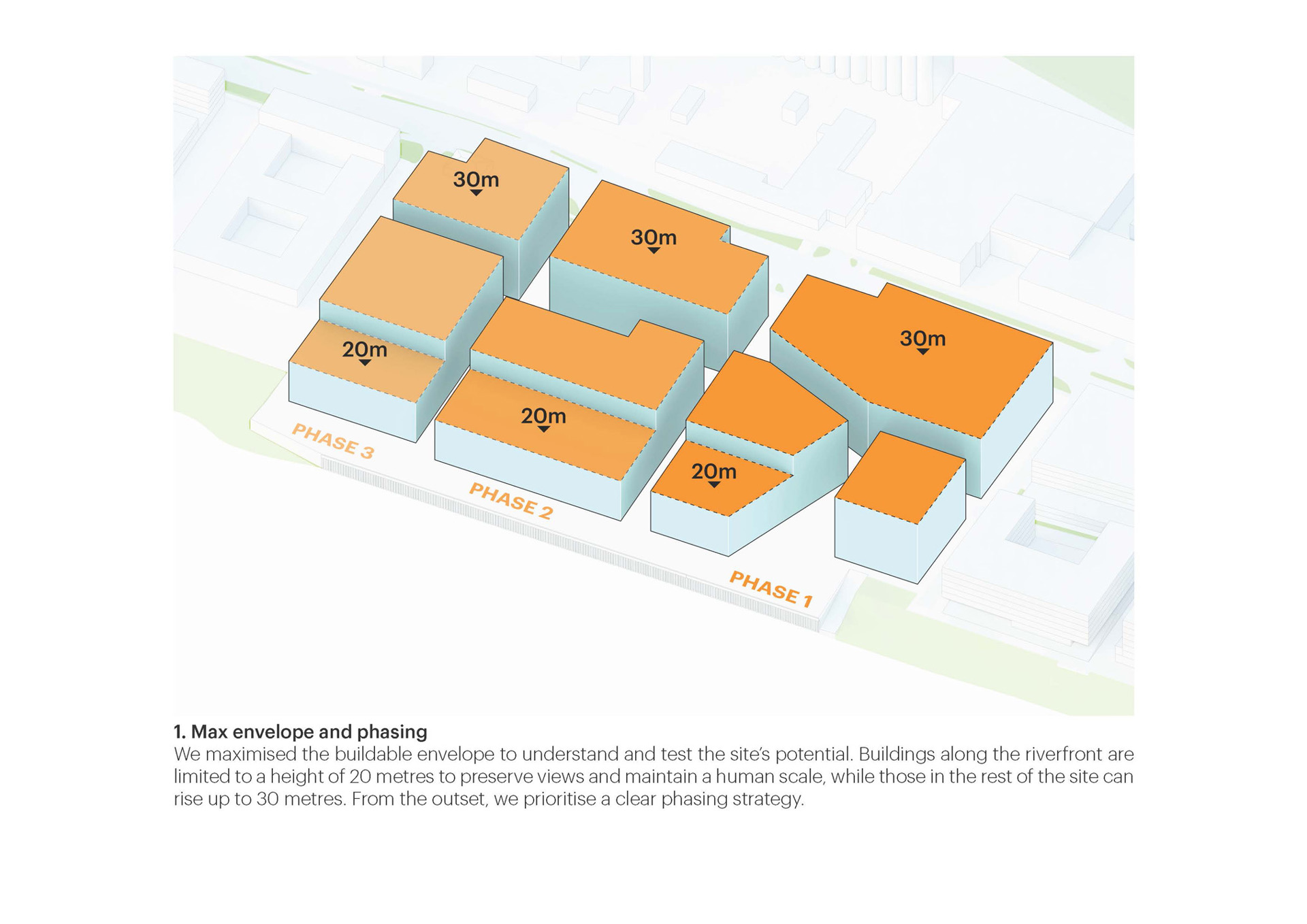
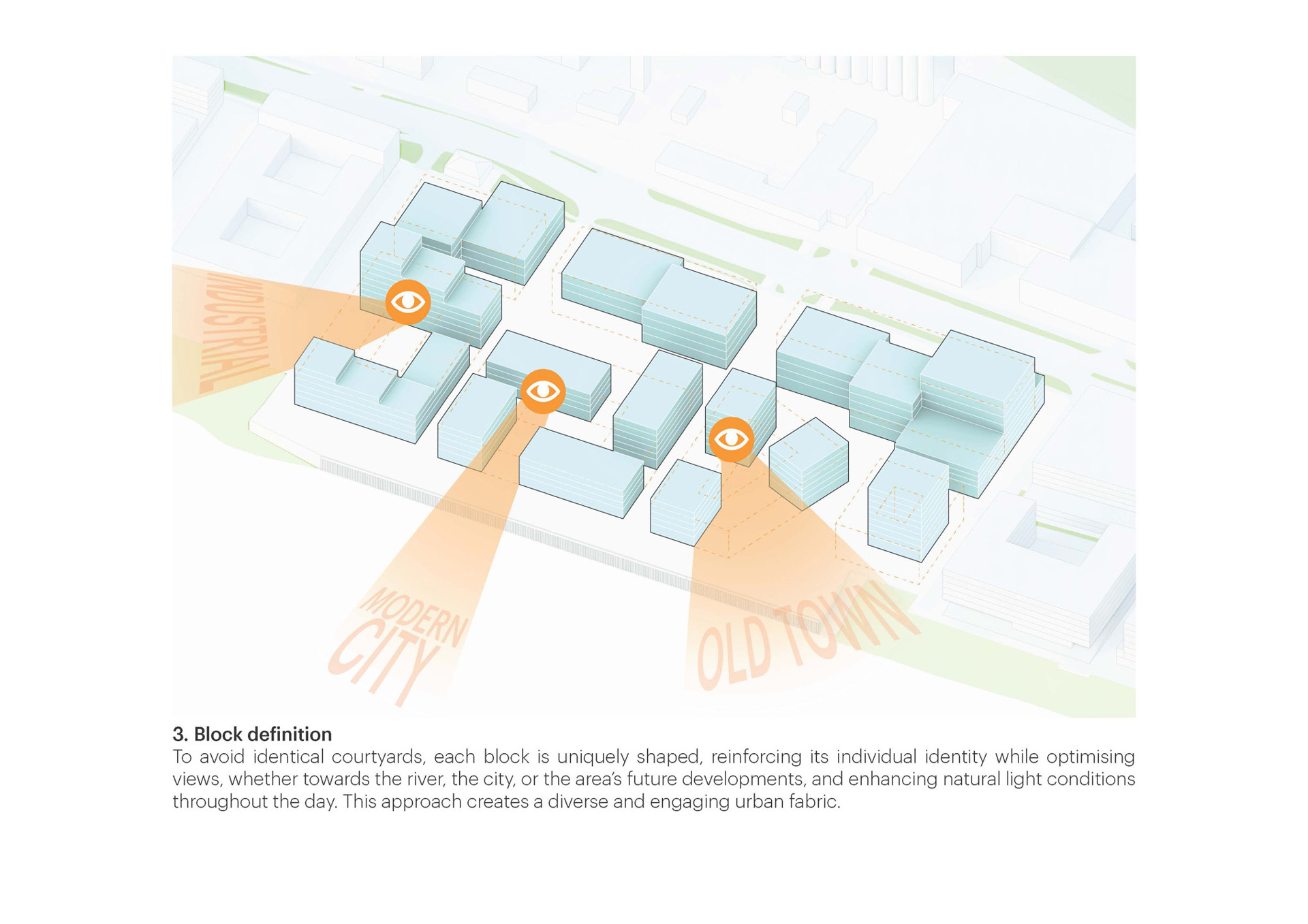
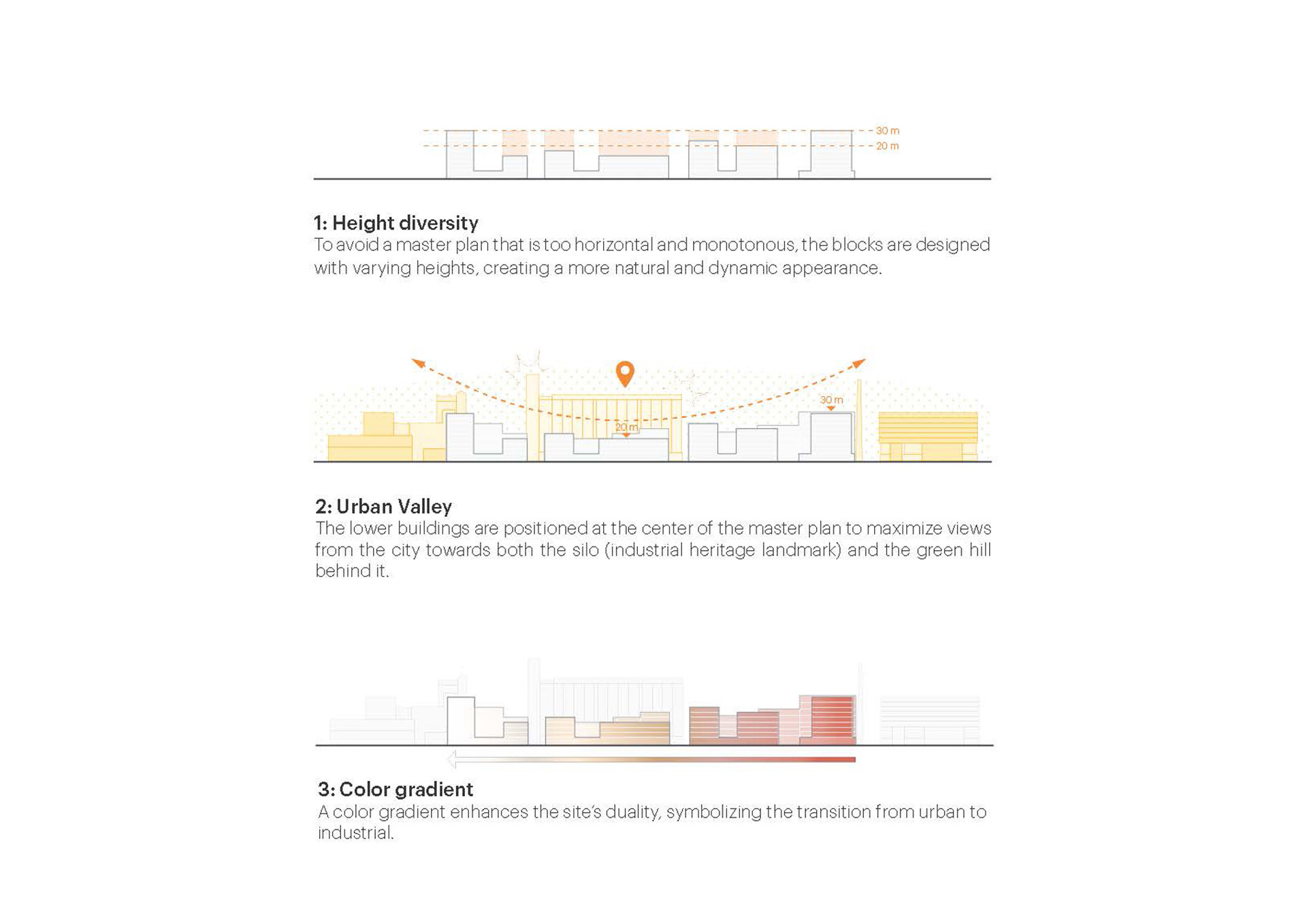
Above the plinth level, the buildings vary in height to create a valley-like profile, preserving views from the city centre towards the eye-catching silo building that is a significant element of the area’s industrial heritage. The masterplan is divided into three phases, with each phase having its own characteristic building shape: the first phase is envisaged as a family of towers; the second phase includes more long, low blocks; and the third includes step-shaped buildings that create more terraces for residents and workers in the buildings.
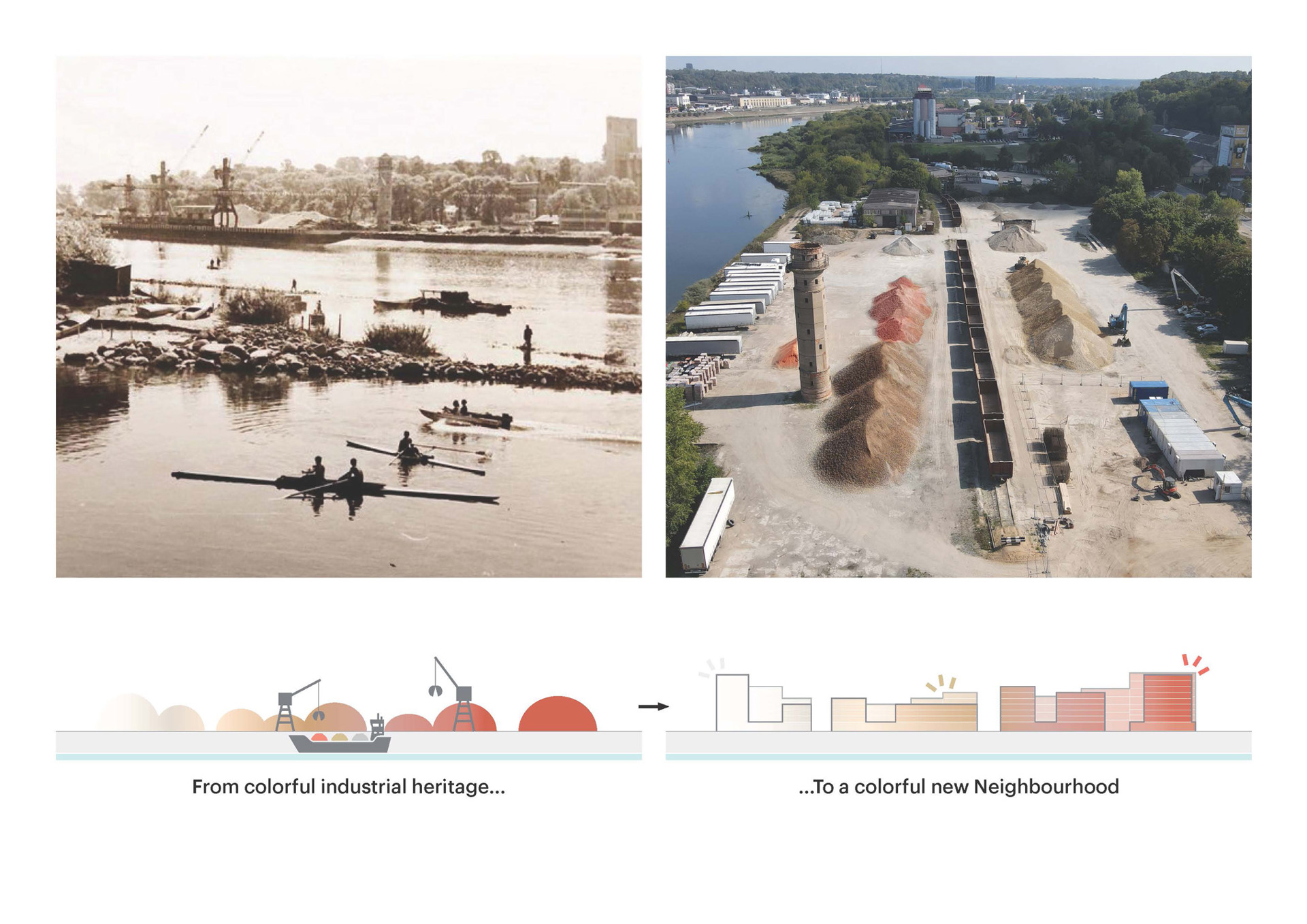
The masterplan recalls the area’s industrial past through its use of materials and colours. The 15-hectare site once stored and shipped clay, sand, peat, and gravel, and these earthy tones return to the site in the form of the building’s façades. The colours are arranged as a gradient, with phase one characterised by the vivid reds of clay, phase two by lighter, sandy tones, and phase three by the light greys and whites of gravel. The plinth level throughout all three phases unifies the neighbourhood with its rich browns inspired by the colours of peat.
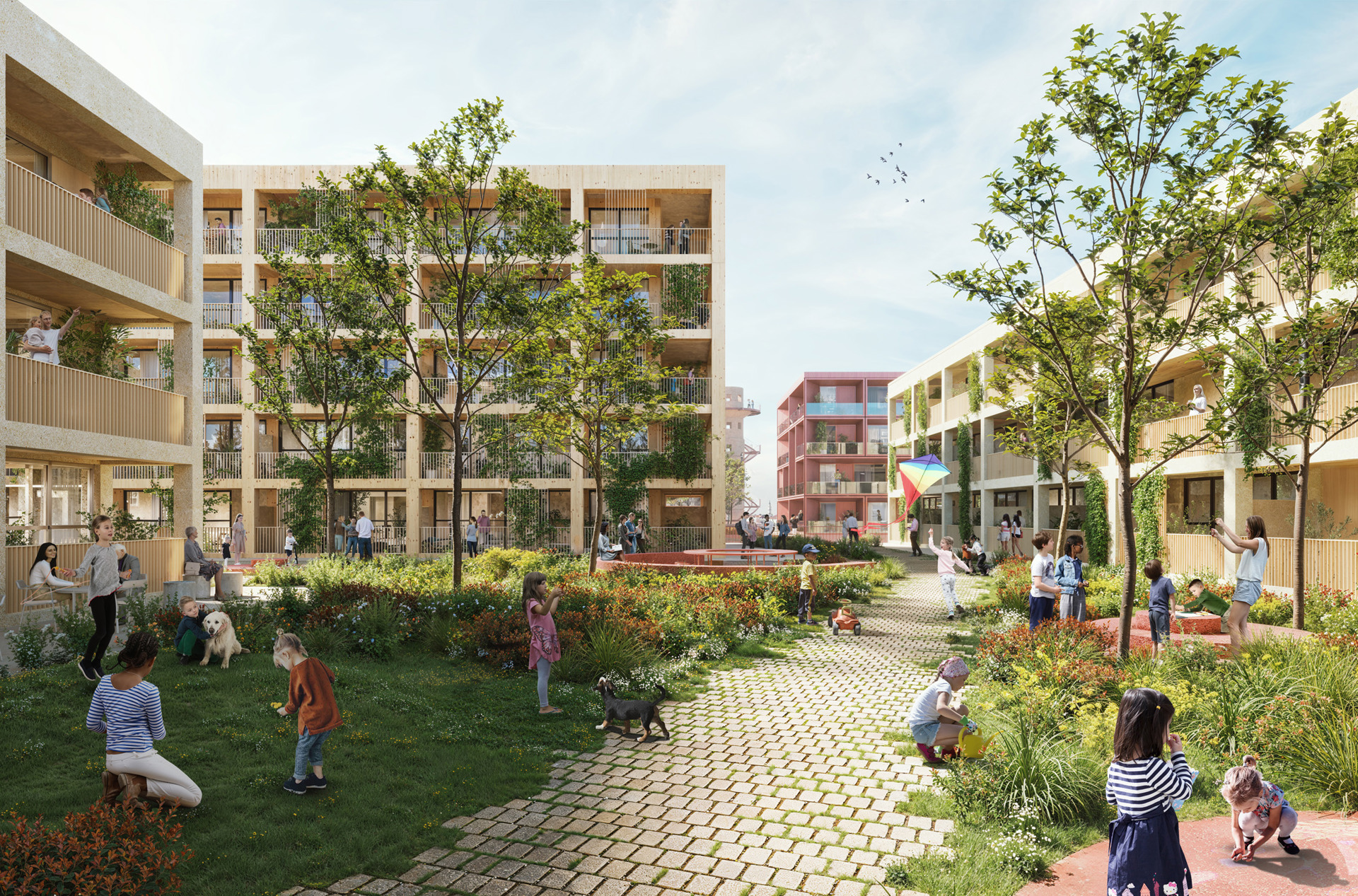
An investigation into potential sustainability approaches for the design revealed that, while widespread use of timber construction in the neighbourhood would be preferable to reduce carbon emissions, the construction industry and regulations in Lithuania are not conducive to such an approach. Instead, the masterplan explores timber construction in select showcase buildings, one in each phase. Each of these three buildings would show a different timber technology. In phase one, Block A would make use of cross-laminated timber (CLT) for its load-bearing walls. In phase two, building C1 would be an apartment building of small, short-stay units built using a modular timber system. Finally, phase three would see an office building produced using a column and beam structure of glued laminated (glulam) timber, making use of the increased structural spans of this construction type. The intention of this varied showcase was to inspire the uptake of these technologies in other projects, creating a ripple effect of sustainability throughout the city and the country.
Gallery
Credits
- Architect
- Founding partner in charge
- Director
- Design team
- Visualisation
- Partners
- Co-architect:
- Architektų biuras Natkevičius
- Timber engineer:
- Ergodomus
- Cost calculation :
- Architektų biuras Natkevičius
- Physical model:
- Modulor - Edita Bružikaitė